Crypto From First Purchase to Safer Digital Asset Management
Crypto refers broadly to digital assets that use blockchain or related distributed-ledger technology to record ownership and transactions. Some cryptocurrencies are designed primarily for payments, while others support applications, smart contracts, decentralised networks, stablecoins, or other digital services.
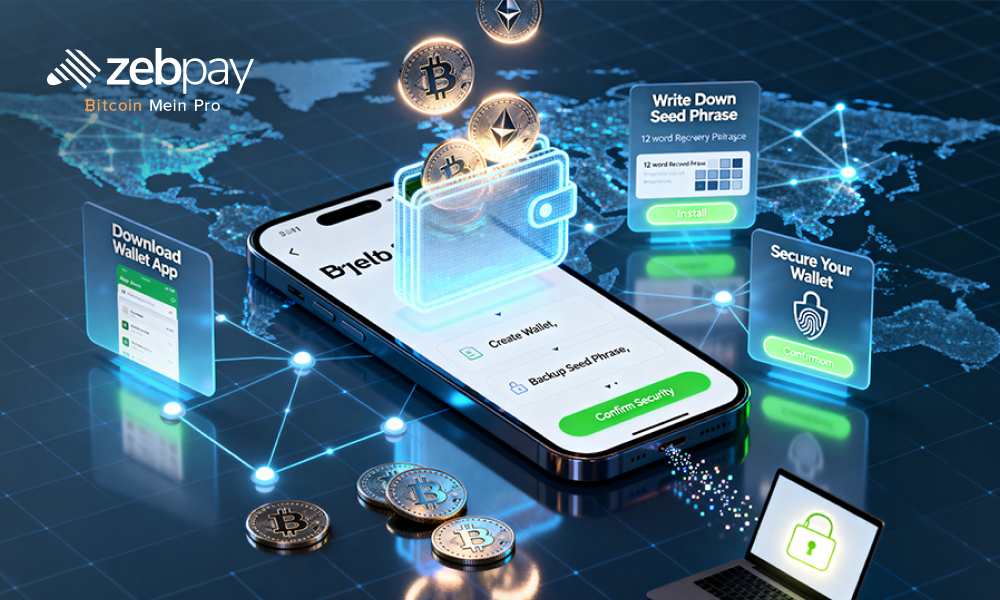
Although buying a digital asset can take only a few minutes, understanding crypto requires more than watching prices. Users need to know how wallets work, how transactions are confirmed, why prices move, how trading fees affect results, and what happens when assets are held on a third-party platform. Crypto can involve substantial volatility, so decisions should be based on research and risk tolerance rather than short-term excitement.
A crypto exchange can provide access to digital assets and trading pairs, but users should first understand the platform's custody model, fees, security controls, withdrawal process, and the assets available before depositing money.
Crypto Is a Category, Not a Single Asset
One of the first mistakes beginners make is treating every cryptocurrency as though it works the same way.
Digital assets can differ significantly in purpose, technology, supply structure, governance, and risk.
Broad categories may include:
- Payment-focused cryptocurrencies
- Smart-contract network tokens
- Stablecoins
- Utility tokens
- Governance tokens
- Asset-backed digital tokens
- Tokens associated with decentralised applications
Two assets may both be labelled crypto while having completely different economic models.
Understanding the purpose of a project is therefore more useful than judging it only by its token price.
Blockchain Provides the Transaction Record
Many cryptocurrencies rely on a blockchain.
A blockchain can be understood as a shared digital record in which transactions are grouped and validated according to the rules of the network.
Instead of one central organisation maintaining the only copy of the ledger, multiple participants may maintain or verify network data.
The exact process differs between blockchains.
Some use proof-of-work mechanisms, while others use proof-of-stake or different consensus systems.
For an everyday user, the important point is that blockchain transactions may become difficult to reverse after confirmation.
That makes careful verification essential.
Token Price Alone Says Very Little
A coin trading at ₹10 is not automatically cheaper or more attractive than one trading at ₹1 lakh.
The unit price needs context.
Useful factors include:
- Circulating supply
- Total or maximum supply
- Market capitalisation
- Trading volume
- Liquidity
- Token issuance schedule
- Actual network usage
For example, an asset can have a very low unit price simply because billions of tokens exist.
Comparing projects only by price per coin can therefore be misleading.
Market Capitalisation Adds More Context
Market capitalisation is commonly estimated by multiplying the current token price by its circulating supply.
It provides a broader view of the market value assigned to an asset.
However, market capitalisation should not be used alone.
A project with a large valuation can still face:
- Technology problems
- Regulatory uncertainty
- Weak adoption
- Concentrated ownership
- Governance issues
- Security incidents
It is one indicator among many.
Why Crypto Prices Move So Quickly
Crypto markets can experience sharp price changes over short periods.
Price movements may be influenced by:
- Supply and demand
- Global market sentiment
- Regulatory developments
- Large-holder activity
- Project announcements
- Macroeconomic conditions
- Exchange listings
- Security incidents
- Leverage and liquidations
Because trading operates continuously on many platforms, volatility can occur outside normal stock-market hours.
Users should therefore avoid assuming that a position will remain stable overnight or over a weekend.
Liquidity Changes the Trading Experience
Liquidity refers broadly to how easily an asset can be bought or sold without causing a large change in price.
Highly liquid markets generally have:
- More active buyers and sellers
- Narrower bid-ask spreads
- Greater order-book depth
Less liquid assets can experience larger price changes when relatively modest orders are placed.
This can increase slippage.
A token's quoted price may therefore not be the exact price at which a large order executes.
Understand the Bid and Ask
Trading screens commonly display bid and ask prices.
The bid represents prices buyers are willing to pay.
The ask represents prices sellers are willing to accept.
The difference between them is called the spread.
A narrow spread usually indicates a more liquid market than a very wide spread, although other factors also matter.
Users should consider the spread when estimating the real cost of entering and exiting a position.
Market Orders Prioritise Execution
A market order is generally intended to execute using the available prices in the order book.
It can be convenient when immediate execution matters.
However, the final execution price may differ from the last displayed price, particularly in volatile or low-liquidity markets.
This difference can become significant with larger orders.
Users should not assume that the visible market price is guaranteed.
Limit Orders Provide Greater Price Control
A limit order allows the trader to specify a maximum purchase price or minimum sale price.
The advantage is greater control over execution price.
The trade-off is uncertainty.
The order may remain open or may never execute if the market does not reach the selected level.
Understanding the difference between market and limit orders is important before actively trading.
Trading Fees Can Reduce Returns
Every trade may involve costs.
Depending on the platform and transaction, these can include:
- Maker fees
- Taker fees
- Withdrawal charges
- Network fees
- Conversion spreads
Frequent trading can make small fees add up quickly.
A strategy that appears profitable before costs may produce much weaker results after fees and slippage.
Users should calculate the complete transaction cost rather than focusing only on the asset's price movement.
A Wallet Does Not Literally Store Coins
A crypto wallet is better understood as a tool for managing the credentials that allow a user to interact with blockchain assets.
The assets themselves are recorded on the blockchain.
Wallets help users access and authorise transactions associated with their blockchain addresses.
This distinction is important because losing access credentials can prevent a user from controlling the assets even though the blockchain record still exists.
Custodial and Self-Custody Wallets Work Differently
Custodial Holding
A platform manages the private keys on behalf of the user.
This can be simpler for beginners because account recovery may work through the service provider.
However, the user depends on the platform.
Potential risks include:
- Platform failure
- Withdrawal restrictions
- Account compromise
- Operational problems
- Self-Custody
The user controls the keys or recovery phrase directly.
This reduces dependence on a central platform but increases personal responsibility.
If the recovery phrase is lost and no backup exists, recovery may be impossible.
Protect the Recovery Phrase
A recovery phrase is one of the most sensitive pieces of information in self-custody.
Anyone who obtains it may be able to control the associated wallet.
It should never be shared with:
- Customer-support agents
- Social-media contacts
- Unknown websites
- People offering wallet recovery
- Anyone asking for verification
Users should also avoid storing it in insecure screenshots, emails, or public cloud documents without understanding the risks.
Always Verify the Destination Address
Blockchain transfers may be irreversible.
Before sending crypto, check:
- Receiving address
- Blockchain network
- Token
- Any memo or destination tag
- Network fee
For a large transfer, some users choose to send a smaller test amount first.
This can help detect address or compatibility mistakes before the full amount is moved.
Network Selection Is Critical
Some digital assets exist or operate across multiple networks.
An exchange may offer several withdrawal networks for the same token.
The receiving wallet may support only certain ones.
The correct network should be supported by both sides.
Choosing an unsupported network simply because it has a lower fee can cause serious problems.
Always follow the deposit instructions provided by the receiving service.
Do Not Confuse Stablecoins With Risk-Free Assets
Stablecoins are generally designed to maintain a relatively stable value against another asset, commonly a fiat currency.
They can be useful for:
- Trading pairs
- Transfers
- Temporary value storage within crypto markets
However, they can still involve:
- Issuer risk
- Reserve risk
- Platform risk
- Regulatory risk
- Temporary price deviations
The word “stable” describes an intended price characteristic, not an absence of risk.
Research the Project Before Buying
A useful project review can begin with basic questions.
What Problem Does It Address?
A clear use case is easier to evaluate than vague promises.
Is the Network Actually Being Used?
Look beyond promotional claims.
How Is the Token Supply Structured?
Large future token releases may affect supply.
Who Controls the Project?
Highly concentrated governance can introduce additional risk.
What Are the Main Risks?
A credible project should not require users to pretend risks do not exist.
Research should focus on substance rather than social-media popularity.
Be Careful With Influencer Recommendations
Digital assets can become popular quickly through online communities.
A social-media post may promote an asset because the creator:
- Owns the token
- Has received compensation
- Wants to attract attention
- Is following a short-term trend
Users should not assume popularity equals quality.
A token can rise rapidly and fall just as quickly.
Independent research is especially important when promotional content emphasises urgency.
Avoid FOMO-Based Decisions
Fear of missing out can lead users to buy after a rapid price increase without understanding the asset.
Common FOMO thoughts include:
- “Everyone is making money.”
- “This is the last chance.”
- “The price cannot fall now.”
- “I need to buy before it doubles.”
These are emotional reactions rather than analytical reasons.
A better approach is to decide in advance:
- What asset is being considered
- Why it is being considered
- How much can be risked
- What would invalidate the original thesis
- Position Size Matters More Than Excitement
Even a well-researched crypto asset can decline sharply.
Users should avoid putting money at risk that is required for:
- Rent
- Medical expenses
- Education
- Loan repayments
- Emergency funds
- Essential household bills
The amount allocated to speculative assets should reflect the user's ability to tolerate loss.
Risk management begins before the purchase.
Diversification Does Not Mean Buying Many Random Tokens
Holding twenty speculative tokens is not necessarily meaningful diversification.
If all of them react similarly to crypto-market sentiment, the portfolio may still be highly concentrated in one risk category.
Users should understand what each asset contributes to the portfolio.
Diversification is more useful when exposures genuinely differ.
Leverage Can Magnify Losses
Some platforms provide leveraged or derivative products.
Leverage allows a user to control a larger position with a smaller amount of capital.
This increases both potential gains and potential losses.
Rapid price moves can result in forced liquidation.
Beginners should not assume leverage is simply a faster version of spot trading.
It introduces a substantially different level of risk.
Keep Security Separate From Trading Decisions
A correct market prediction does not protect against poor account security.
Users should consider:
- Strong unique passwords
- Two-factor authentication
- Withdrawal protection
- Login alerts
- Device security
- Phishing awareness
Never log in through a link received from an unknown sender.
Opening the official application or typing the known website address independently can reduce phishing risk.
Watch for Fake Support Accounts
Crypto users are frequently targeted by impersonation scams.
A fake support account may ask the user to:
- Share a recovery phrase
- Connect a wallet
- Send a verification payment
- Install remote-access software
- Transfer funds to “secure” them
Legitimate support should not require users to surrender control of their wallet.
Pressure and urgency are strong warning signs.
Keep Transaction Records
Crypto activity can involve many small transactions across several assets.
Maintaining records can help with:
- Portfolio tracking
- Cost analysis
- Tax reporting
- Dispute resolution
- Understanding fees
Useful details include:
- Date
- Asset
- Quantity
- Buy or sell price
- Trading fee
- Withdrawal fee
- Transaction reference
Relying only on memory becomes difficult once activity increases.
Tax Treatment Should Be Checked Locally
Crypto tax treatment varies by jurisdiction and can change.
Buying, selling, swapping, earning rewards, or receiving crypto may have different tax consequences depending on local rules.
Users should refer to current official guidance and obtain professional tax advice when necessary.
Tax considerations should be reviewed before frequent trading, not only after the financial year ends.
Platform Selection Is Part of Risk Management
Before choosing where to trade crypto, users should compare more than the number of listed tokens.
Useful factors include:
- Platform reputation
- Legal and regulatory status
- Security controls
- Trading liquidity
- Fee transparency
- Deposit and withdrawal options
- Supported networks
- Customer support
- Account-protection features
A platform that offers hundreds of assets is not automatically more suitable than one with fewer assets and clearer operational controls.
Conclusion
Crypto combines technology, markets, custody, and personal financial decision-making. Understanding only the price chart provides an incomplete picture.
Users should learn how the relevant blockchain works, evaluate token supply and liquidity, understand order types and fees, decide between custodial and self-custody arrangements, and protect account credentials carefully.
Volatility means losses can happen quickly, while irreversible blockchain transfers make operational mistakes particularly important. A disciplined approach based on research, position sizing, security, and realistic expectations can help users participate more carefully than decisions driven by hype or short-term price movements.